Gulf County Dog Registration Information
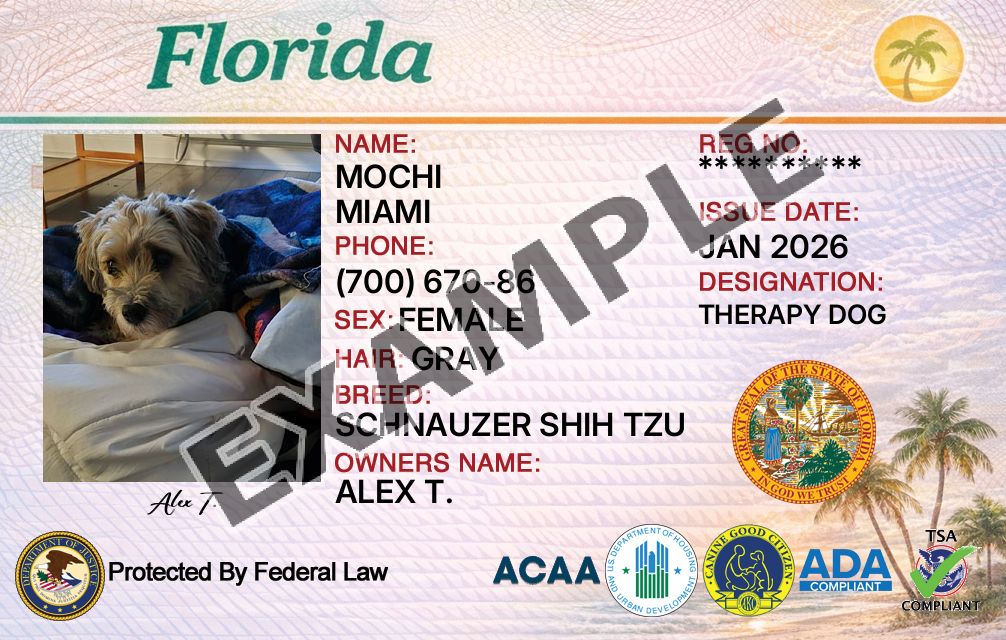
Service Dogs and Emotional Support Animals in Gulf, Florida
If you’re searching “where do I register my dog in Gulf County, Florida for my service dog or emotional support dog,” the key thing to know is that there are usually two separate topics involved: (1) local dog licensing / rabies compliance (often handled through county animal control processes), and (2) whether your dog qualifies as a service dog under the Americans with Disabilities Act (ADA) or as an emotional support animal (ESA) for housing purposes. Gulf County’s animal control program and rabies requirements apply to dogs in the county regardless of whether the dog is a pet, a service dog, or an emotional support animal.
Where to Register or License Your Dog in Gulf County, Florida
The offices below are official government contacts that serve Gulf County residents for animal control questions and related county compliance topics. If you are specifically looking for a “dog license in Gulf County, Florida,” start with Gulf County Animal Control / Dispatch for direction on the current licensing or tag process and any required documentation.
Gulf County Animal Control (via Gulf County Dispatch Center)
Gulf County Public Works (Administrative Office)
Gulf County Code Enforcement (County)
Florida Department of Health in Gulf County (Rabies / Bite Reporting)
Overview of Dog Licensing in Gulf County, Florida
How “registration” typically works locally
People often use the word “register” to mean different things. In many Florida counties, what residents actually need is a county or local dog license (sometimes tied to a rabies tag or local tag). This helps local animal control identify the dog’s owner, confirm rabies compliance, and support public safety programs.
Gulf County has an Animal Control Ordinance that includes rules about rabies vaccination and proof (including a rabies vaccination certificate and a rabies vaccination tag). Even if you have a service dog or emotional support dog, the dog can still be subject to generally applicable public health requirements like rabies vaccination and tag display.
Local requirements may vary by municipality
Within Gulf County, requirements and enforcement can differ depending on whether you live inside a city’s limits (such as Port St. Joe or Wewahitchka) versus unincorporated Gulf County. If you are unsure which rules apply to your address, start with Gulf County Animal Control (via dispatch) and ask whether the county process applies or if your city has additional licensing or tag steps.
What You Need Before Registering a Dog
Common documents and information requested
The exact dog licensing requirements in Gulf County, Florida can depend on your location and the current county procedures. However, most local licensing/tag processes require proof that your dog is currently vaccinated for rabies, along with basic ownership information.
- Rabies vaccination certificate signed by the veterinarian (keep a copy for your records)
- Rabies vaccination tag (often required to be displayed on the dog’s collar)
- Your contact information (name, address, phone)
- Proof of residency (sometimes requested, especially for resident-only programs)
- Spay/neuter documentation (if a reduced fee applies in a particular program)
Rabies proof and tags in Gulf County
Gulf County’s ordinance includes a rabies vaccination requirement for dogs, cats, and ferrets four months of age or older, and describes proof of vaccination as a rabies vaccination certificate signed by the veterinarian and a rabies vaccination tag, with the tag displayed on the animal at all times (subject to limited exceptions).
Steps to Register or License a Dog in Gulf County, Florida
Step-by-step process (practical approach)
- Confirm your dog is current on rabies vaccination. If your dog needs an updated rabies vaccine, schedule it with a licensed veterinarian. Keep the signed rabies certificate.
- Collect your dog’s details and your residency details. Have your dog’s description (breed, color, age), microchip number (if applicable), and your address/phone ready.
- Contact Gulf County Animal Control through the Dispatch Center. Ask specifically: “Where do I register a dog in Gulf County, Florida?” and “What is the current process to obtain any required county tag or license?” Dispatch can route you to the correct county contact and explain next steps for your area.
- Ask whether your address is inside a municipality with separate rules. If you live in a city limit, ask whether the city has any additional requirements beyond the county ordinance.
- Complete the licensing/tag process as directed and keep copies. Keep a paper copy and a digital photo of vaccination documents and any license/tag receipt for your records.
If your dog is a service dog or emotional support dog
The local dog license process (if required) is separate from your dog’s status as a service dog or ESA. You generally follow the same rabies and local dog licensing rules as other residents, unless a specific local rule provides a lawful exception. If you believe an exception applies, ask Gulf County Animal Control/Dispatch what documentation is needed to apply it.
Service Dog Laws in Gulf County, Florida
What makes a dog a service dog (not a registry)
Under the ADA, a service dog is a dog that is individually trained to do work or perform tasks for a person with a disability. The tasks must be directly related to the person’s disability. A service dog’s legal status is based on training and function, not on a purchased ID card, online listing, or “registration.”
Service dog status vs. local licensing
A service dog can still be subject to neutral, generally applicable local public health rules (like rabies vaccination and potentially a dog license in Gulf County, Florida). If you are asked for proof in a setting, the legal questions usually focus on whether the dog is trained to perform disability-related tasks, not on whether the dog appears in a registry.
Quick comparison: dog license vs. service dog vs. emotional support animal
| Category | What it is | What “proof” usually looks like | Typical legal context |
|---|---|---|---|
| Dog license (county/local) | A local licensing/tag requirement (when applicable) connected to animal control and public health rules. | Rabies certificate and/or local license/tag information; owner contact information; possibly fees. | County/city ordinances and public health compliance (e.g., rabies vaccination rules). |
| Service dog | A dog individually trained to perform disability-related tasks/work for a person with a disability (ADA). | No universal registry; credibility comes from the dog’s training and behavior. In many public settings, limited questions may be asked about tasks (not documentation). | Public access (businesses, government buildings, etc.) under federal disability law; also applies alongside local animal rules. |
| Emotional support animal (ESA) | An animal that provides emotional support that alleviates one or more symptoms of a disability; not task-trained for ADA public access. | Typically a letter from a licensed healthcare provider for housing accommodation requests (not a county registry). | Primarily housing-related accommodations under fair housing rules; generally not the same public access rights as service dogs. |
Emotional Support Animal Rules in Gulf County, Florida
What an ESA is (and isn’t)
An emotional support animal supports a person’s disability-related needs through companionship and emotional support. Unlike service dogs, ESAs are not defined by task training for public access under the ADA. That means an ESA generally does not have the same right to enter all public places where pets are not allowed.
How ESA documentation usually works
ESA status is commonly supported by documentation from a licensed healthcare provider when requesting certain accommodations in housing. This is separate from “where to register a dog in Gulf County, Florida,” which relates to local animal control rules such as rabies vaccination compliance and any local licensing/tag requirements.
ESA status and local licensing/rabies rules
ESA status does not remove generally applicable requirements like rabies vaccination. If Gulf County requires a local tag/license in your circumstances, an ESA would typically follow the same local rules as other dogs.
Frequently Asked Questions
What You May Need
Disclaimer
Local laws, fees, office locations, and contact details can change. Residents should verify the most current information with their local animal services or licensing office in Gulf County, Florida.
Local Search Tips (Gulf County)
- When calling, say: “I need help with a dog license in Gulf County, Florida” and “where to register a dog in Gulf County, Florida.”
- Ask whether your address is in a city limit (Port St. Joe or Wewahitchka) and whether that changes the process.
- Have your rabies vaccination certificate ready so staff can tell you what the next step is for tags or licensing records.
Register A Dog In Other Florida Counties
Select your county below to get started with your dog’s ID card. Requirements and license designs may vary by county, so choose your location to see the correct options and complete your pup’s registration.
- Alachua County Dog Registration
- Baker County Dog Registration
- Bay County Dog Registration
- Bradford County Dog Registration
- Brevard County Dog Registration
- Broward County Dog Registration
- Calhoun County Dog Registration
- Charlotte County Dog Registration
- Citrus County Dog Registration
- City of Jacksonville County Dog Registration
- Clay County Dog Registration
- Collier County Dog Registration
- Columbia County Dog Registration
- DeSoto County Dog Registration
- Dixie County Dog Registration
- Duval County Dog Registration
- Escambia County Dog Registration
- Flagler County Dog Registration
- Franklin County Dog Registration
- Gadsden County Dog Registration
- Gilchrist County Dog Registration
- Glades County Dog Registration
- Hamilton County Dog Registration
- Hardee County Dog Registration
- Hendry County Dog Registration
- Hernando County Dog Registration
- Highlands County Dog Registration
- Hillsborough County Dog Registration
- Holmes County Dog Registration
- Indian River County Dog Registration
- Jackson County Dog Registration
- Jefferson County Dog Registration
- Lafayette County Dog Registration
- Lake County Dog Registration
- Lee County Dog Registration
- Leon County Dog Registration
- Levy County Dog Registration
- Liberty County Dog Registration
- Madison County Dog Registration
- Manatee County Dog Registration
- Marion County Dog Registration
- Martin County Dog Registration
- Miami-Dade County Dog Registration
- Monroe County Dog Registration
- Nassau County Dog Registration
- Okaloosa County Dog Registration
- Okeechobee County Dog Registration
- Orange County Dog Registration
- Osecola County Dog Registration
- Palm Beach County Dog Registration
- Pasco County Dog Registration
- Pinellas County Dog Registration
- Polk County Dog Registration
- Putnam County Dog Registration
- Santa Rosa County Dog Registration
- Sarasota County Dog Registration
- Seminole County Dog Registration
- St. Johns County Dog Registration
- St. Lucie County Dog Registration
- Sumter County Dog Registration
- Suwannee County Dog Registration
- Taylor County Dog Registration
- Union County Dog Registration
- Volusia County Dog Registration
- Wakulla County Dog Registration
- Walton County Dog Registration
- Washington County Dog Registration